
Embroidery in Chilliwack: A Practical Guide to Garments, Placement, and Style
You've decided on embroidery for your next order — now comes the part that actually determines how it turns out. Which garments hold a logo well? Where does it go? And is flat stitching the right call, or should you be asking about puff? Here's what to know about embroidery in Chilliwack before you place the order, so what shows up matches what you pictured.

'Why Embroidery Holds Up Better Than Other
Decoration Methods
Screen printing and heat transfer both have their place, but embroidery is the one method that photographs well, wears well, and still looks sharp after two seasons of washes. It adds texture and dimension a flat print can't, which is exactly why polos, jackets, and caps almost always default to stitched logos rather than printed ones.
For local businesses — trades crews, real estate teams, restaurants, sports clubs — that durability matters. A jacket gets worn for years, not weeks, and the logo needs to hold up the whole time.
Quick Gut Check Before you order anything, have a digital-ready version of your logo (vector, not a photo or screenshot). This one detail affects placement options, stitch count, and how clean the final result looks more than almost anything else. |
Which Garments Work Best for Embroidery
Not every fabric takes a needle equally well. Tightly woven, stable materials hold stitches cleanly, while thin, stretchy, or mesh fabrics can pucker or distort under dense stitching.

Polos
The classic. Stable knit holds a left-chest logo cleanly — a go-to for staff uniforms and client-facing teams.

Jackets & Softshells
Heavier fabric gives embroidery a stable base — ideal for left-chest branding or full back designs.

Caps & Toques
Structured front panels are built for embroidery — this is where 3D puff really shines.
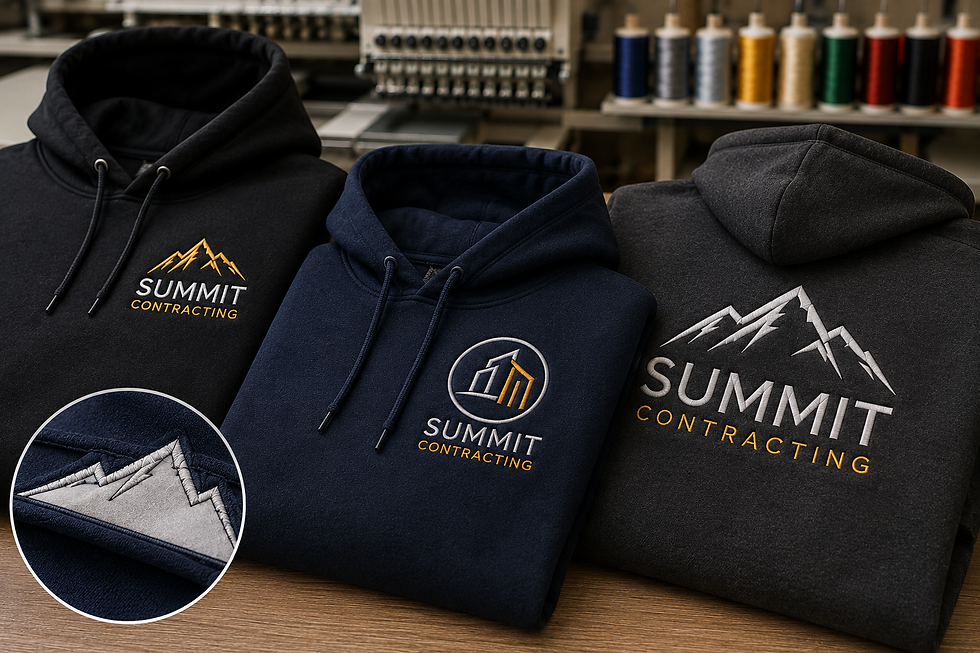
Hoodies
A team-gear favourite. Fleece holds stitching cleanly with the right backing behind the design.
Where embroidery gets tricky: very thin performance tees, mesh hi-vis vests, and anything with heavy stretch. Those fabrics usually do better with a heat transfer or screen print instead — we'll flag it if your garment choice isn't a great embroidery candidate before we run anything.
Logo Placement by Garment and Use Case
Placement isn't just about looking good on a hanger — it depends on how the garment gets worn and where you want the eye to land.
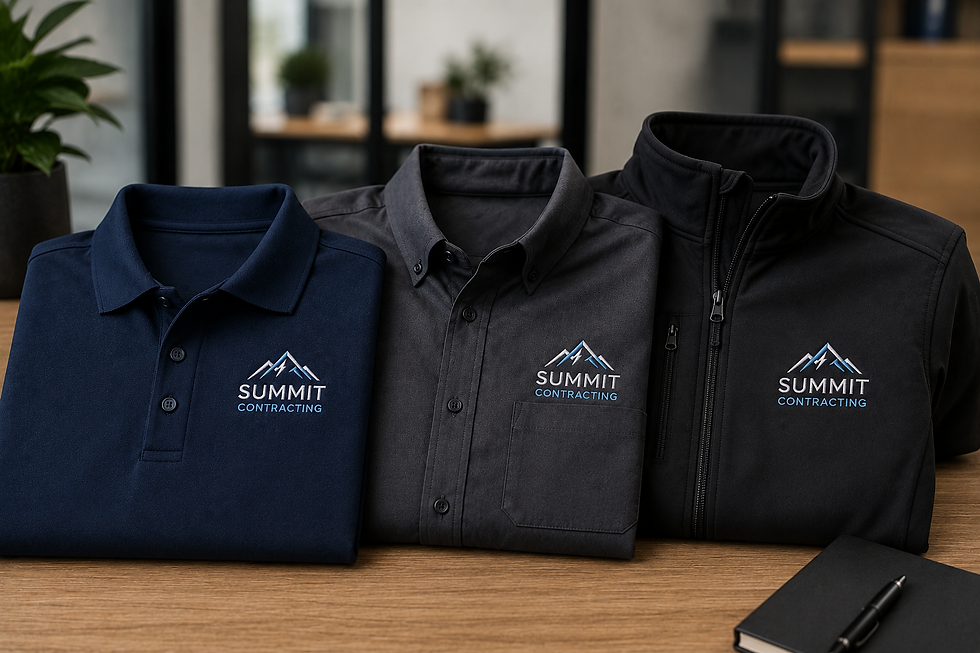
Left Chest
The standard for polos, button-ups, and jackets. Professional, subtle, and the safest choice when in doubt — this is what most client-facing teams choose.

Full Back
Best for jackets, hoodies, and hi-vis outerwear where visibility matters — crews working outdoors or event staff who need to be spotted from a distance.

Cap Front
The default placement for hats, usually paired with a smaller mark on the side or back for a name, role, or year.

Sleeve
A common spot for a secondary detail — a team name, individual name, or small icon that complements a chest logo without competing with it.
Choosing Embroidery in Chilliwack: Flat, 3D Puff, or Satin Stitch
Once garment and placement are settled, the last decision is stitch style — and this is where a lot of the visual character of your branding comes from.
Flat Stitch
The workhorse. Clean and versatile, works on nearly any garment, and handles fine detail well — most logos default here.
3D Puff
Foam underneath the stitching raises the design for a bold, textured look. Best on caps and thicker fabrics with simple, bold shapes — text and large lettering work especially well.
Satin Stitch
A tight, glossy stitch used for text, borders, and fine linework. Gives a polished, almost printed finish on smaller design elements.
What's Trending in Branded Apparel Right Now
A few shifts worth knowing about if you're planning a refresh for your team:
Smaller, cleaner logos. Oversized branding is giving way to left-chest and sleeve placements that read as more premium and are more likely to get worn outside of work too.
Tone-on-tone embroidery. Thread that closely matches the garment colour for a subtle, almost tonal effect — a quieter alternative to a high-contrast logo.
Patch-style badge embroidery. A framed, badge-like look on jackets and caps that reads as durable and a little more rugged than a standard flat logo.
Layering pieces as team gear. Softshell jackets and structured pullovers are showing up more often as the "step-up" piece for teams that already have branded tees, giving crews a more elevated option for client meetings or cooler days.
Personalization alongside the logo. Adding a name or role next to the main logo — common for sports teams and crews where individual identity matters as much as the brand.
How Sapphire Creative Handles Your Order
We digitize your logo in-house, so the file that gets stitched is built specifically for embroidery rather than repurposed from a print file. That step alone prevents most of the puckering, missing detail, or off-colour issues that come from using the wrong file type.
From there, we'll talk through garment options, placement, and stitch type together before anything goes to the machines — and if something in your design won't translate cleanly to embroidery, we'll tell you and suggest an adjustment rather than running it as-is.
Common Questions
How many colours can an embroidered logo have?
Embroidery isn't limited by colour the way screen printing can be — most logos with several colours translate just fine. What matters more is fine detail and small text, which can get lost at a small size regardless of colour count.
Is there a minimum order size for embroidery?
We work with both small teams and larger bulk orders. Reach out with your numbers and we'll let you know what makes sense for your budget and timeline.
Can you embroider a logo we already have used for printing?
Usually, yes — but it needs to be redigitized specifically for stitching first. A print file and an embroidery file are built differently, and skipping that step is where most rough-looking results come from.
Do you serve businesses outside of Chilliwack?
Yes. We're based in Chilliwack but regularly work with clients across Abbotsford, Langley, Mission, Agassiz, and throughout the Fraser Valley. Distance isn't a barrier.
How long does an embroidery order take?
It depends on order size and season, but we'll give you an accurate turnaround estimate once we know your garments, quantities, and design. Reaching out 2–3 weeks ahead of when you need it gives the most flexibility.
Not Sure Where You Fit? Let's Figure It Out.Bring us your logo and your team size, and we'll help you land on the right garments, placement, and stitch type — no guesswork required. |


Comments